

 Natalie Torres
 Every June, the same group chat fires up among my LA friends: “Anyone know what air purifier we should be buying before the smoke comes back?” Last year, we waited too long. The Costco that usually carries Coways sold out by August, and a friend in Pasadena ended up paying $420 for one that retails for $229.
I started buying purifiers in early May this year so I’d have time to actually use them and tell you which ones earned a spot in my apartment before the next round of smoke rolls down from Big Bear. I tested four; I’m keeping three. Here’s the honest breakdown for California wildfire season 2026.
The thing about CADR you should actually know
Every purifier brags about its CADR (Clean Air Delivery Rate) number. The thing nobody tells you on the box: CADR is measured at the highest fan speed, which is the speed you almost never run a purifier at, because it sounds like a jet engine. The CADR you actually live with is the number on speed 1 or 2, and that’s never published.
So in addition to the spec-sheet CADR, I logged how loud each purifier was at the speed I’d actually leave it running overnight, using a phone decibel app eight feet from the unit. Below 35 dB is roughly “I can sleep through this.” Above 50 is roughly “I can’t.”
Coway Airmega 200M — $229
The Coway Airmega 200M is the purifier I’d put in 80% of California living rooms. It’s the one Wirecutter and The New York Times have called the best for years, and after a month of testing I understand why — it’s quiet at the speed you actually use it (about 31 dB on auto in my 350 sq ft living room), the auto mode genuinely responds to particle spikes, and the replacement filters are reasonably priced at around $45.
The downside: it looks like a 1990s appliance. The off-white plastic does not suit a modern interior. If you live in a styled apartment, you may end up tucking it behind furniture, which slightly defeats the point.
Blueair Blue Pure 211i Max — $329
The Blueair 211i Max is the purifier I’d buy for a bedroom over 300 sq ft. The HEPASilent design moves a genuinely impressive amount of air at a noise level that’s noticeably lower than any of the others I tested, including the Coway. At my measured 28 dB on the medium setting, it’s the only one I left running overnight without a thought.
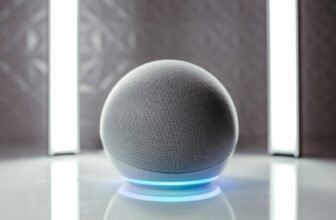
Aesthetically it also wins — a fabric-wrapped cylinder that looks like a beautifully designed Bose speaker rather than a piece of medical equipment. The replacement pre-filter sleeve comes in five colors, which is the kind of feature I’d usually mock and ended up enjoying.
Levoit Core 600S — $259
The Levoit Core 600S handles the biggest rooms of the three. Rated for 635 sq ft, which is borderline overkill for an apartment but a reasonable bet if your living room and kitchen are an open plan. The smart features are real: it integrates with Apple Home, the air quality readout on top is genuinely useful at a glance, and the auto mode kicks up when I cook — something the Coway is slower to do.
The catch is footprint. It’s tall and visible, and on a hardwood floor it occasionally vibrates audibly at higher speeds. I moved mine onto a small rug and the buzz stopped.
The one I returned
I tested a budget no-name purifier I won’t name (it has 4.4 stars on Amazon and 18,000 reviews; you know the type). Two issues. First, the “HEPA” filter inside was visibly thinner than the spec page implied. Second, after a week, the unit started emitting a faint chemical smell when running on high — likely off-gassing from cheap plastic components. I sent it back inside the return window.
Lesson: with air purifiers, brand matters more than for most consumer electronics. The price gap between a Coway and a no-name unit is $100. The price gap between actually-clean air and slightly-cleaner-but-also-slightly-plastic-smelling air is incalculable.
The filter math nobody loves talking about
You’ll replace a HEPA filter once a year per purifier. Budget about $45-60 per replacement for the brand-name units; activated-carbon refresher pads are extra if you’re near a freeway. Over five years of ownership, the filter cost approaches the price of the purifier itself. This is a real number to plan for, not a hidden tax.
What I’d actually do
If you have one room you sleep in and one room you live in, get two units — the Blueair 211i Max for the bedroom because nothing matters more than sleeping through bad air, and the Coway 200M for the living room because it’s the proven, boring, correct choice.
If you have an open-plan space, the Levoit Core 600S covers more square footage than the other two and integrates with smart home setups out of the box.
And whatever you decide — buy it before August. There’s a frustrating pattern in California where supply tightens exactly when you need the thing most, and last year’s panic-buy prices were a 30-40% premium over April prices. The April-to-June window is the sweet spot.
The smoke will come. The purifier should already be running by the time it does.
Featured photo by Boris Hamer on Pexels. SmartBuy earns a small commission on qualifying Amazon purchases.






 Germany
  France
  Netherlands
  Canada
  United Kingdom
  United States
  Turkey
  Croatia
  Spain
Spain  Italy
Italy  India
India